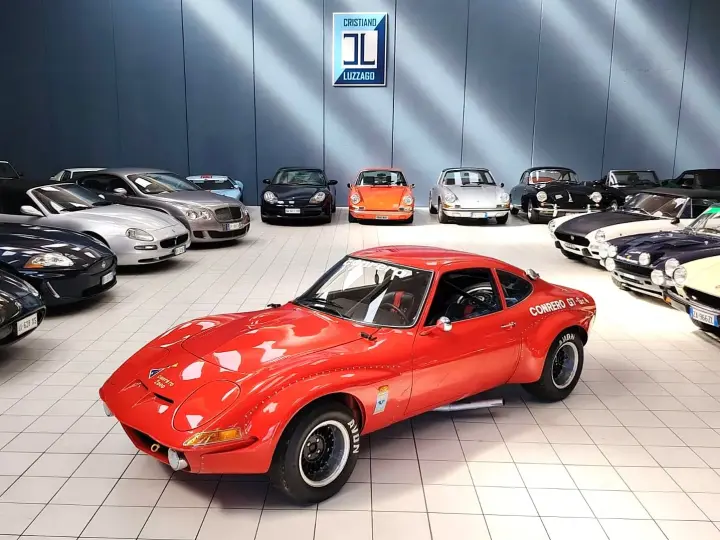
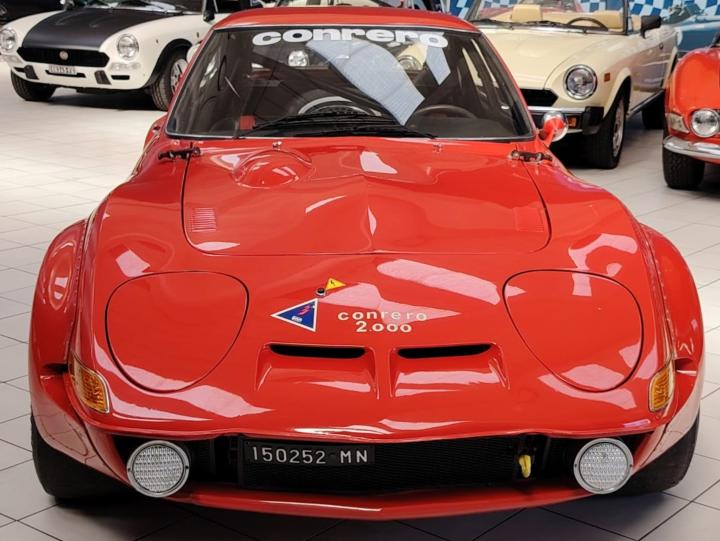
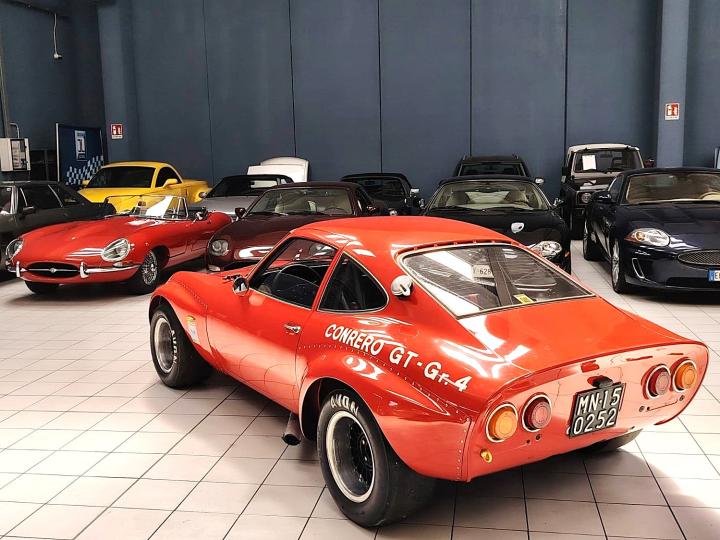
OPEL 1900 GT GRUPPO 4 OFFICIAL TEAM CONRERO 1970 VIN 941906704
A MILESTONE IN MOTORSPORT AND IN THE EPIC LEGACY OF VIRGILIO CONRERO’S OPEL CARS
1 OF THE 4 OFFICIAL CONRERO TEAM.
VIRGILIO CONRERO, A MAGICIAN FOREVER – ARTICLE FROM GRACE MAGAZINE, JANUARY 2009
From the long collaboration between “the Magician” and the House of the Lightning Bolt, numerous winning cars were born. Among them is also a coupé with a radial head which, thanks to a powerful engine and outstanding reliability, managed to win even the most coveted Targa of the era.
■ Virgilio Conrero is not famous only for the cars he built. He is also, and above all, renowned for having developed and turned into winners cars that other manufacturers had already designed and produced.
It is no coincidence that, more than as a constructor, the Magician is remembered for the refined ingenuity with which he prepared a myriad of other vehicles, from Alfa Romeo to Renault, from Japanese brands to Peugeot Talbot, including the unforgettable Opels.
The relationship with the House of the Lightning Bolt is indeed one of the most intense and long-lasting.
It began in 1969, when he met Count Peano, then president of the Italian division of the German manufacturer, and obtained the role of official tuner and racing team manager—a position he held for 16 years.
Love at first sight
The first Opel car to receive the Magician’s attention was an Opel GT.
And it is precisely from this coupé—whose size and design philosophy made it particularly suitable for racing—that numerous versions would emerge over the years.
The Opel GT featured in these pages is the first of five examples prepared by Conrero as a Group 4 car with a radial head.
Until then, all the GTs coming from Autotecnica retained the cast iron cylinder head of the production version.
Initially, the coupés on which Conrero focused were equipped with either a 1,900 cc four-cylinder engine or a 2,300 cc inline six-cylinder engine, but in both cases they were homologated in Group 2.
Then came the Opel GT 1900 Group 4. The car was used by engineer Benedini, who at the time, together with Giorgio Pianta and Pino Pica, was among the drivers of the official team.
A miniature Corvette
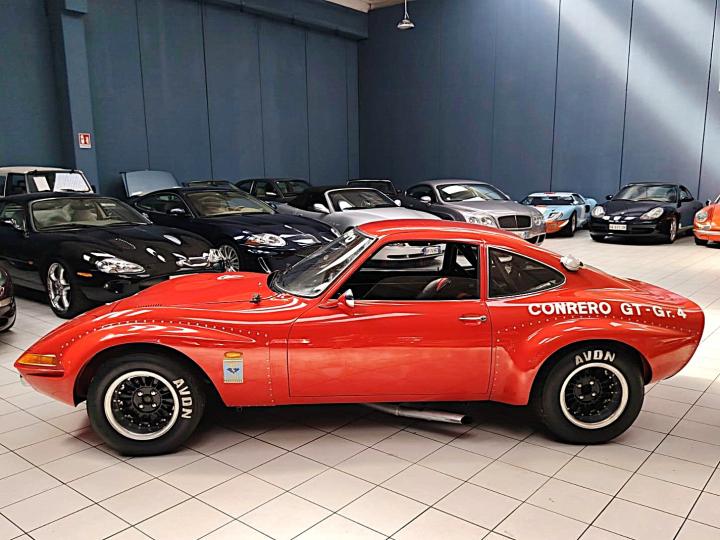
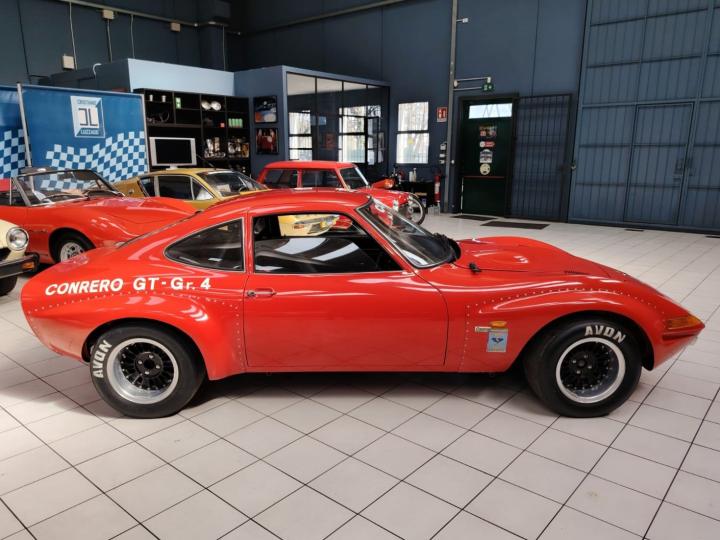
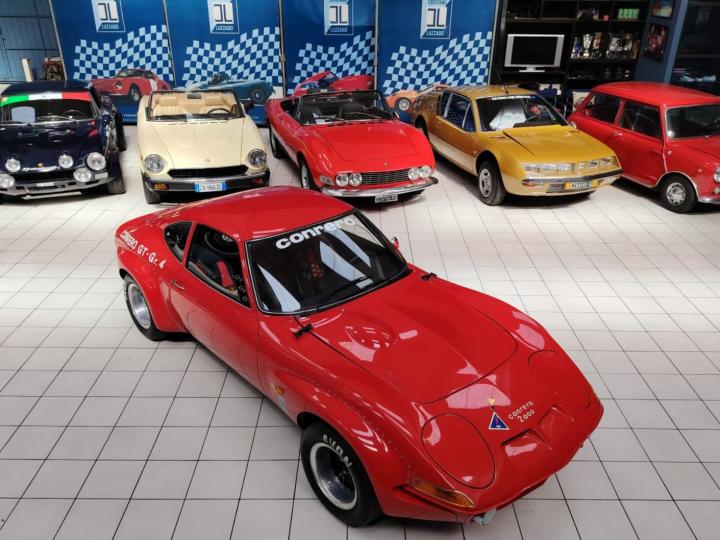
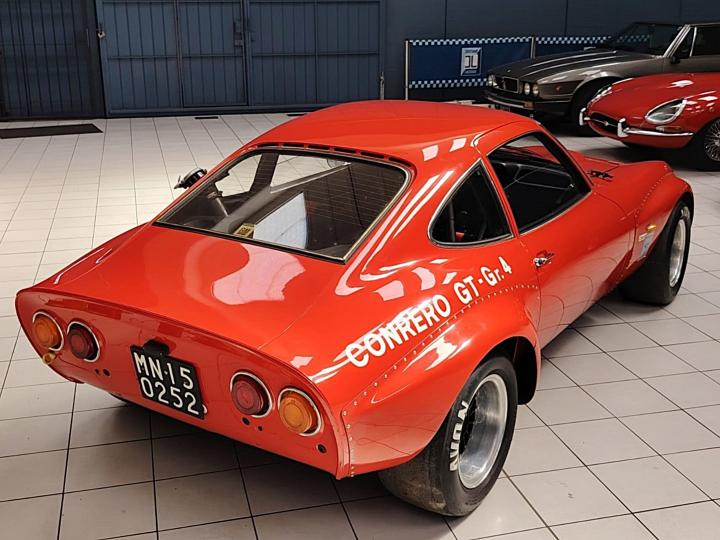
Compared to the production version, the Conrero GT stands out visually through a few targeted details that increase its aggressiveness.
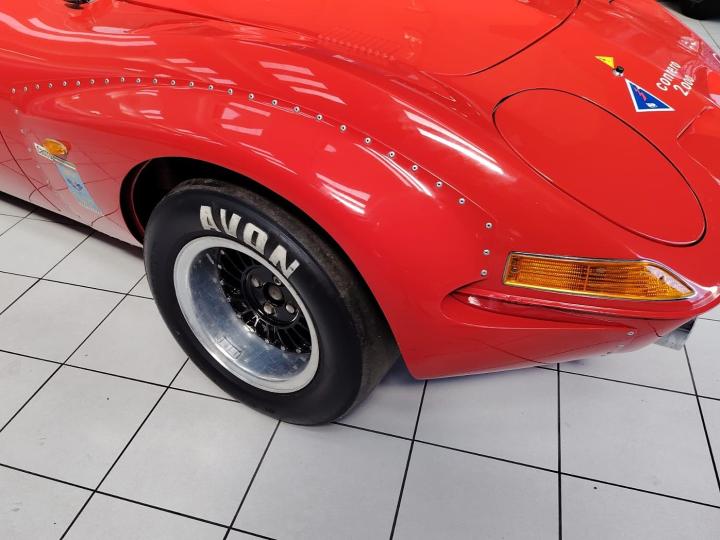
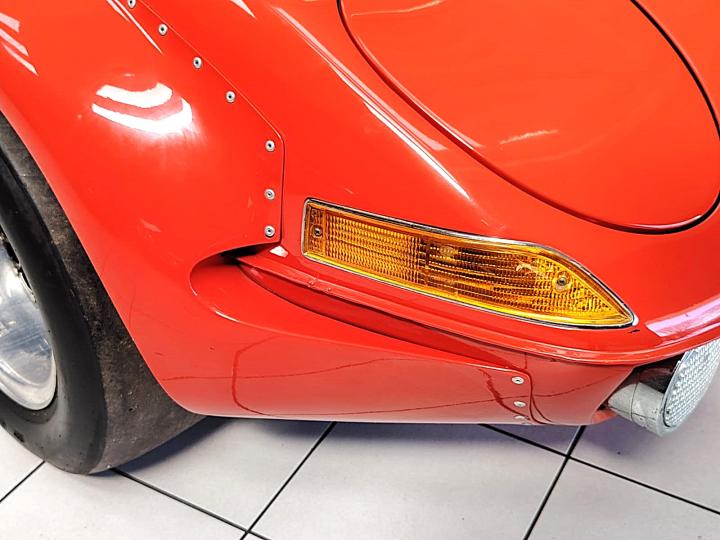
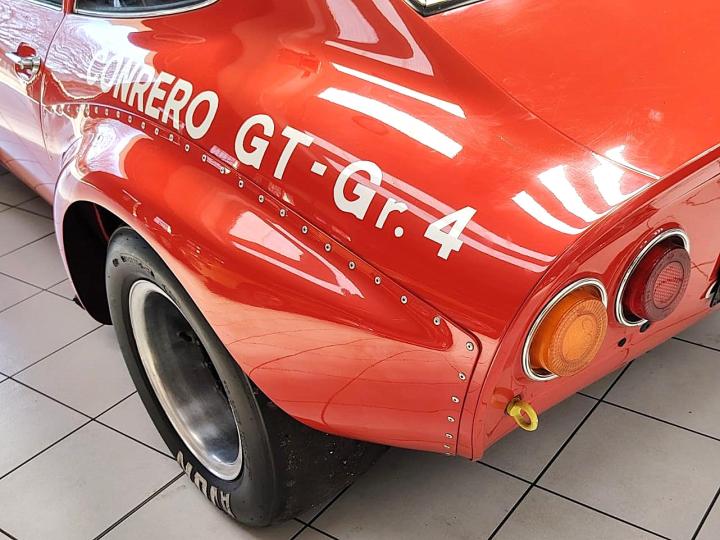
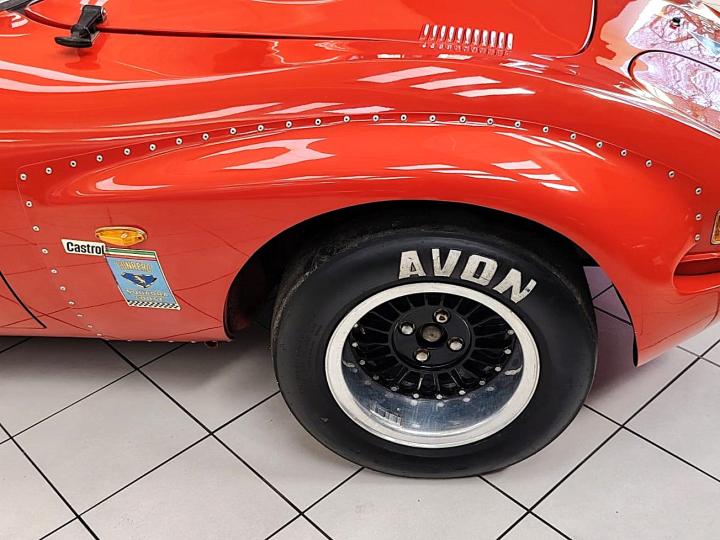
Most notable are the prominent riveted plastic fender extensions, necessary to cover the widened track.
For the rest, the beauty of its design comes from the collaboration between Opel and General Motors, which for this model drew inspiration from 1970s American muscle cars.
It is not difficult to find references—hardly hidden—to cars such as the Corvette C3.
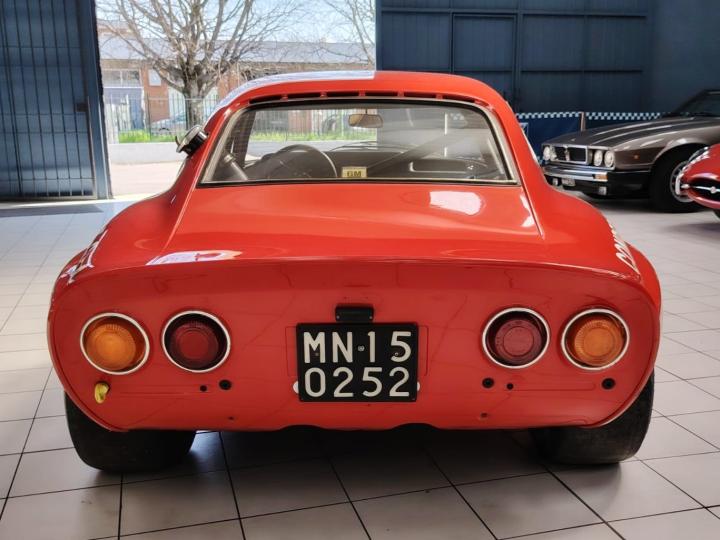
These can be seen in the pointed front end, the pop-up headlights rotating 180 degrees when activated, the circular rear lights, the low profile defined by alternating curved lines, and, not least, the truncated tail.
In the Conrero version, the exhaust pipe emerges on the left side beneath the driver’s door.
At the rear, the lower body line remains shaped as a reminder of the original dual exhaust system.
Racing interior
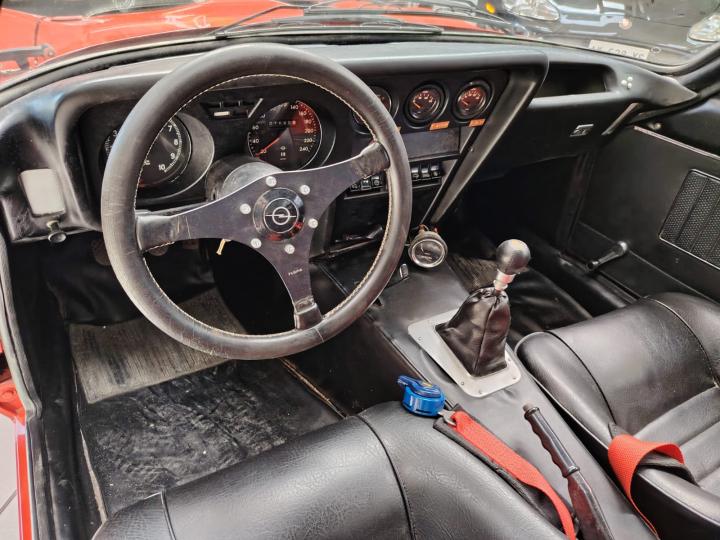
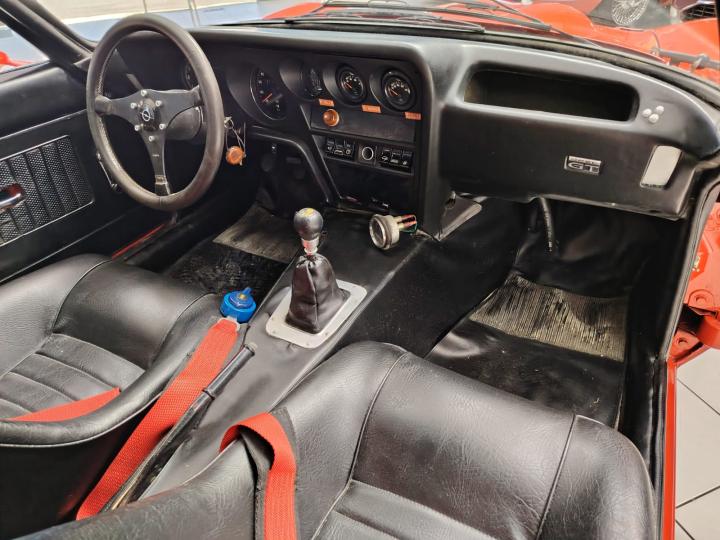
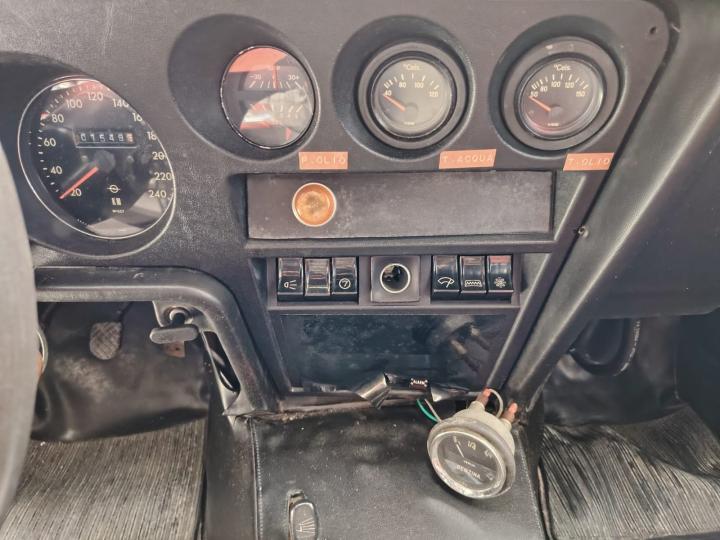
Inside as well, the Opel GT already featured a highly sporting cockpit even in standard form, with anatomical seats, a three-spoke steering wheel with a distinctive goblet shape, and a rich instrumentation panel.
While the instrumentation remains largely unchanged (except for the addition of an oil temperature gauge by Conrero, with the fuel gauge relocated to a makeshift position on the central tunnel), everything else is deeply modified.
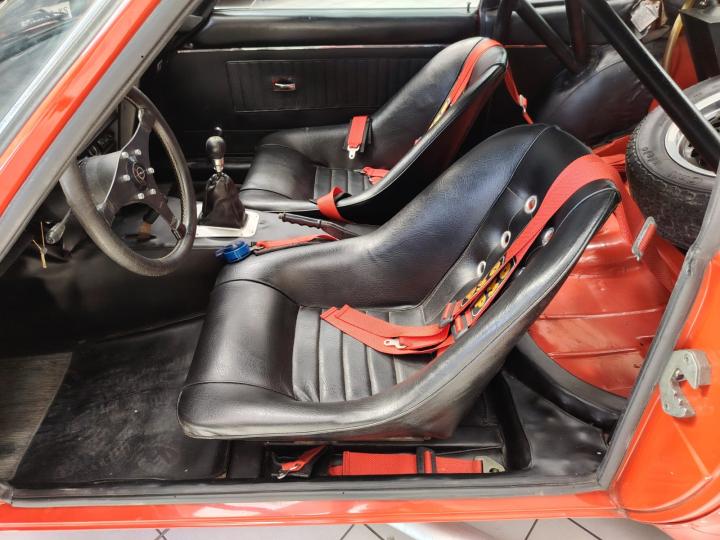
The Group 4 version removes all unnecessary elements and replaces the rest with more competition-oriented components.
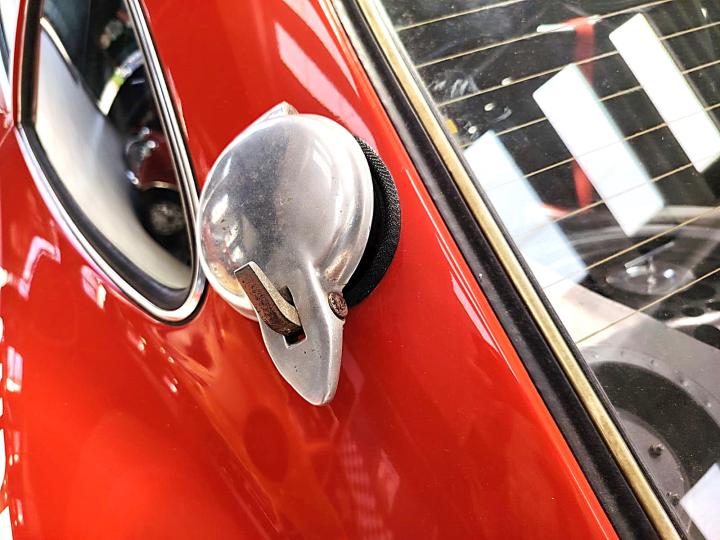
Racing seats and a sport steering wheel are installed, while the rear bench disappears in favor of a roll bar and a spare wheel mounted near the rear window.
Thanks to these modifications, additional space is gained for the fuel tank, which increases from the original 60 liters to approximately 100 liters.
The fuel tank would play a key role in the victory at the 1971 Targa Florio, when, driven by Salvatore Calascibetta and Paolo Monti, the Opel 1900 GT won the Group 4 category (and finished ninth overall), outperforming official Porsche 911s forced into more frequent refueling.
However, the car had already begun winning the previous year, when, driven by Giampaolo Benedini, it claimed victory in the Bressanone–Sant’Andrea race, once again ahead of a field of highly competitive Porsches.
Losing its head
From a mechanical standpoint, the original components (derived from those used in the Rekord and Kadett B) were modified according to Conrero’s philosophy, introducing numerous improvements.
In addition to the modifications already applied to previous Opel GTs—such as lightened connecting rods (with polished ribs and without balancing masses) and a flywheel reduced by as much as 3 kg—the Turin-based “Magician,” starting with this example, also worked on the cylinder head.
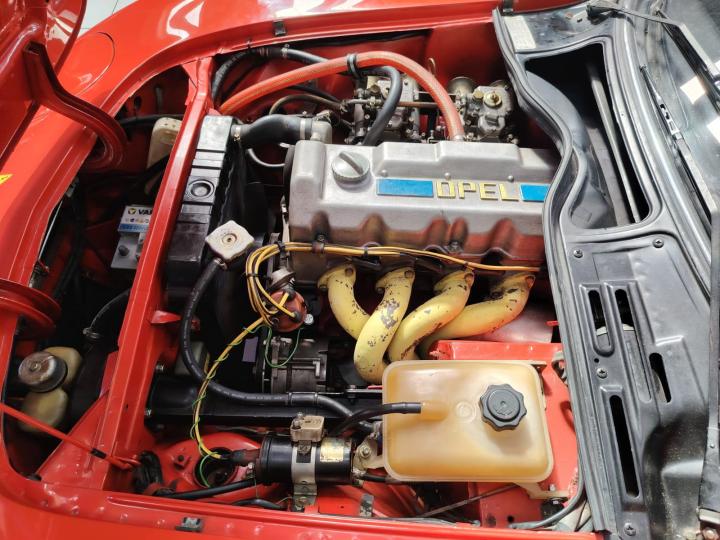
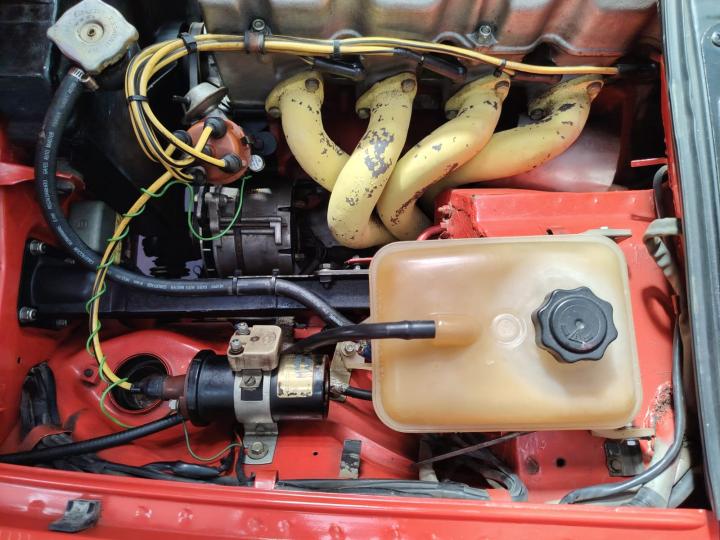
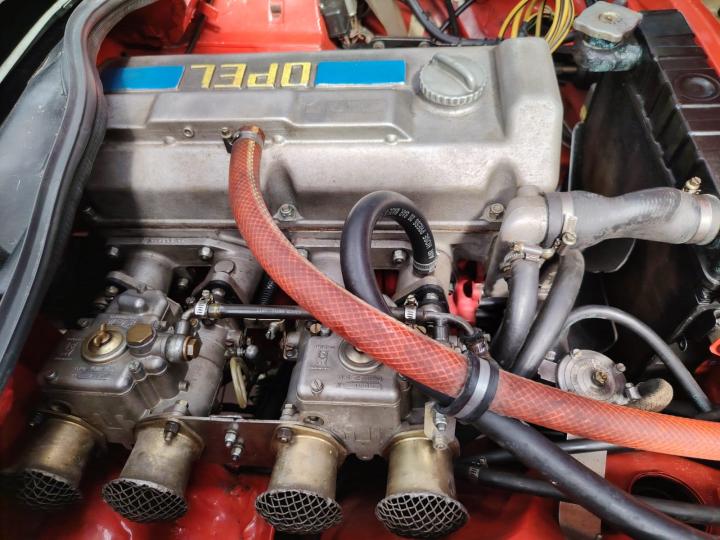
Thus, on the 1,897 cc four-cylinder engine, the cast iron head was replaced with a new radial head, where the two valves per cylinder are arranged in a V configuration.
This allowed for better and more uniform combustion inside the combustion chamber.
The original Solex 32 twin-barrel carburetors were replaced by two larger Weber 45 units (also twin-barrel), mounted horizontally on special lightweight alloy manifolds specifically designed by Conrero.
For the transmission, a ZF 5-speed gearbox replaced the original 4-speed unit.
The Opel 1900 GT Group 4 was also equipped with a limited-slip differential, which was optionally available even on the road version.
With the new mechanical setup, the Conrero coupé developed approximately 175 hp at 7,000 rpm, compared to the 90 hp (at 5,100 rpm) of the standard version, and reached nearly 230 km/h instead of the 185 km/h of the production car.
Although not the most powerful car in its class, it stood out for exceptional robustness and reliability—qualities that proved decisive on multiple occasions.
To ensure efficient operation of such a highly tuned engine, Conrero also modified the lubrication system, installing a different oil cooler capable of better controlling oil temperatures, along with a special aluminum oil pan.
This pan, by separating the oil from the crankshaft via a deflector, prevented power loss.
Light and responsive
Regarding suspension, the Opel GT 1900 Conrero retained the original layout: independent front wheels with wishbones and a lower transverse leaf spring, telescopic hydraulic shock absorbers, and a rear rigid axle with coil springs, trailing arms, Panhard rod, anti-roll bar, and telescopic dampers.
However, to improve responsiveness, Conrero reduced the camber of the lower leaf spring and replaced all shocks and springs with stiffer, more adjustable units.
At the rear axle, the rubber silent blocks were replaced with Uniball joints, increasing rigidity at mounting points and reducing flex under acceleration.
To achieve proper road holding, Conrero also intervened on wheels and brakes.
The original pressed steel wheels were replaced with two-piece BBS rims (black spokes with polished lips) fitted with 215/50 R13 tires.
For braking, rear drums were replaced by disc brakes on all four wheels.
Glorious past
Unlike the other examples mentioned previously, the Conrero-prepared Opel 1900 GTs boast a top-level racing pedigree.
In later developments, Conrero managed to produce a version of this coupé, still under two liters of displacement, capable of delivering as much as 225 hp.
As proof of the car’s excellence, prototypes were also built with different body styles, including a barchetta, and many private drivers continued to race Conrero Opel GTs in the following years.
Technical Specifications – Opel 1900 GT Gr. 4 Conrero
Front longitudinal inline 4-cylinder engine, 1,897 cc
Bore and stroke: 93 x 69.8 mm
Compression ratio: 9:1
Maximum power: 175 hp at 7,000 rpm
Maximum torque: 14.9 kgm (standard version)
Fuel system: 2 Weber 45 carburetors
Valve train: overhead valves in V configuration, single overhead camshaft
Cooling: forced water circulation
Suspension:
Front: independent, wishbones, lower transverse leaf spring, telescopic hydraulic shock absorbers
Rear: rigid axle, coil springs, trailing arms, Panhard rod, anti-roll bar, telescopic hydraulic shock absorbers
Transmission: rear-wheel drive
Gearbox: 5-speed + reverse
Brakes: disc brakes on all four wheels
Steering: rack and pinion
Tires: BBS wheels with 215/50 R13 tires
Length: 4,110 mm
Width: 1,680 mm
Wheelbase: 2,431 mm
Height: 1,210 mm
Track: 1,254 mm front, 1,284 mm rear
Weight: 890 kg
Top speed: approx. 230 km/h
Fuel tank: approx. 100 liters
Price on request